
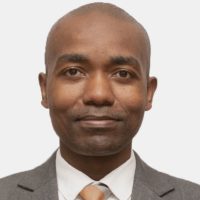
This user has not added any information to their profile yet.
I am an Associate Professor of Emergency Medicine at the Emergency Medicine Department (EMD) of Muhimbili University of Health and Allied Sciences (MUHAS). I also serve as a consultant emergency physician at the EMD of Muhimbili National Hospital (MNH), and adjunct Assistant Professor of Emergency Medicine at Atrium Health in Charlotte, North Carolina, USA. Prior to these roles I served as director of planning and investment, Head of the EMD, Research and Emergency Medicine Program head at EMD of MUHAS, which is the premier clinical, academic, and medical research centre in Tanzania. I am very committed to research and development of emergency care in Sub-Saharan Africa. My specific research interests include emergency care systems, trauma care, sepsis, and acute complications of chronic illnesses, such as HIV.
My research interests focus on emergency and acute care systems, trauma and injury care, sepsis, and acute complications of chronic diseases, including HIV. I am particularly interested in health systems strengthening, improving the quality and outcomes of emergency care, and exploring the application of artificial intelligence to clinical decision-making in resource-limited settings.
In collaboration with colleagues at MUHAS and partner institutions across Tanzania and internationally, we are advancing several research initiatives focused on sepsis, acute care systems transformation, injury prevention and management, the clinical application of artificial intelligence, and acute presentations of chronic diseases. Our work aims to generate evidence that informs clinical practice, strengthens health systems, and improves patient outcomes, particularly in resource-limited settings.
